From the dense forests of the Nordschleife to the bleeding-edge wind tunnels of Stuttgart and Munich — Germany didn't just participate in motorsport. They defined the physics of it.
Before aerodynamic downforce and hybrid powertrains, there was pure mechanical ambition. Germany rapidly became the crucible of automotive engineering — producing vehicles that redefined reliability, power, and terror.
Mercedes-Benz and Auto Union stripped the white lead paint off their cars to meet weight limits, exposing bare aluminum. This birthed the legend of the Silver Arrows — machines pumping out over 500 horsepower on skinny tires, dominating European Grand Prix racing.
The dawn of aerodynamic mastery. Porsche introduced the 917, a car so fast it reshaped the rules of Le Mans. Germany pivoted from raw power to engineering endurance, making 24-hour races the ultimate proving ground.
Audi revolutionized rally racing by introducing all-wheel-drive systems to motorsport. The Quattro system shattered track records and forced the entire automotive industry to re-evaluate grip and torque distribution.
Michael Schumacher, driving with surgical precision, rewrote the Formula 1 history books. His work ethic, combined with German engineering philosophy, set a new benchmark for driver-engineer integration.
Five marques that didn't just build cars — they built an entirely new idea of what a car could be. Each one a philosophical statement forged in steel, rubber, and victory.
The undisputed kings of endurance. From the 956 ground-effects era to the V4 hybrid 919, Porsche uses racing to build the ultimate road cars.
Founded by Ferdinand Porsche in Stuttgart, this marque has become virtually synonymous with sports car racing. Their philosophy of "transfer of technology" means the lessons learned on grueling 24-hour circuits directly influence the cars sold to the public.
The Weissach facility is holy ground for automotive engineers. Here, iconic flat-six engines and revolutionary hybrid systems are stress-tested. Porsche holds the all-time record for overall victories at the 24 Hours of Le Mans.

A legacy built on precision. Dominators of the modern Formula 1 turbo-hybrid era, capturing 8 consecutive Constructors' Championships.
The AMG division operates on a strict "One Man, One Engine" philosophy. Each high-performance engine is hand-assembled by a single master technician in Affalterbach, whose signature is affixed to a plaque on the block.
The return of the Silver Arrows in the modern Formula 1 era resulted in an unprecedented period of dominance — eight consecutive Constructors' Championships, rewriting the standards of pinnacle motorsport engineering.
Pioneers of technology. They brought AWD to rallying, and later conquered Le Mans with TDI diesel and e-tron hybrid technology.
"Vorsprung durch Technik" is not just a slogan — it is the absolute foundation of Audi Sport. In the 1980s, they defied convention by bringing all-wheel-drive to the WRC with the Quattro, instantly rendering 2WD cars obsolete.
In the 2000s, Audi shocked the world by winning Le Mans with a diesel (R10 TDI), then the first hybrid victory (R18 e-tron quattro). They use racing as a high-speed laboratory for future road technology.
The benchmark for touring car racing. The M division turned sports sedans into track weapons, most notably with the legendary E30 M3.
Born from the desire to dominate European Touring Car Championships, BMW M took perfectly balanced sedans and injected them with aggressive aerodynamics, screaming inline-six and V8 engines, and track-tuned suspension.
The BMW E30 M3 remains the most successful touring car in motorsport history. Every M car is rigorously tested at the Nürburgring Nordschleife — proving that a daily driver can be a weekend track weapon.

Giants of rally and off-road. WRC dominance with the Polo R and record-shattering electric speed with the ID.R at Pikes Peak.
Volkswagen's motorsport division operates at the absolute peak of extreme racing. They dominated the Dakar Rally with the Touareg and systematically dismantled the WRC competition with the Polo R.
The ID.R, an all-electric engineering marvel, shattered the all-time hill climb record at Pikes Peak — proving the devastating acceleration and downforce capabilities of EV powertrains.
Three strips of tarmac that have broken cars, humbled champions, and measured the worth of every machine bold enough to enter.
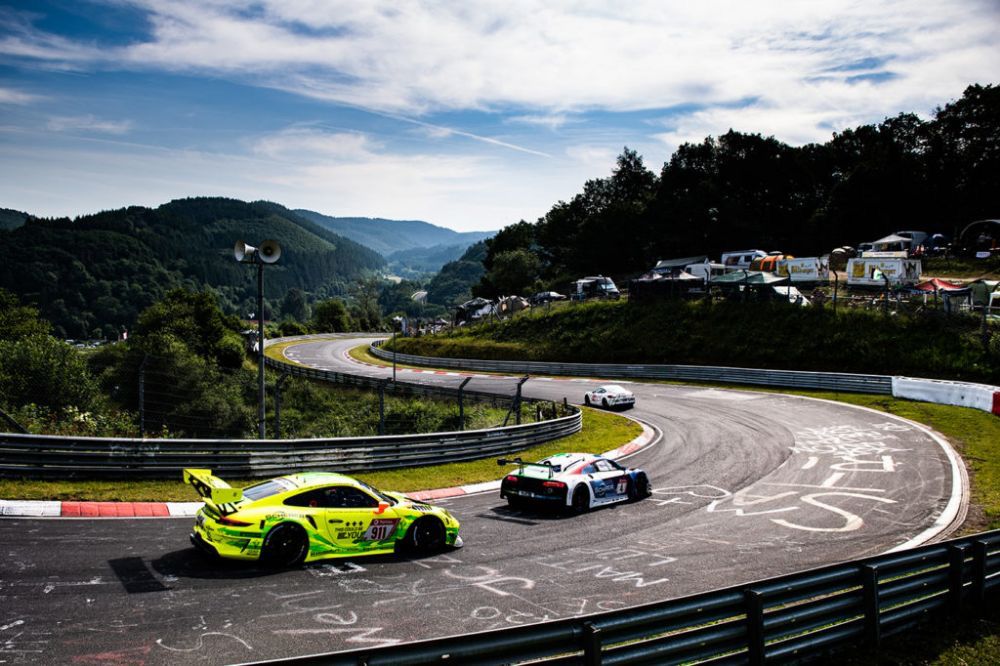
Dubbed "The Green Hell" by Jackie Stewart — arguably the most terrifying and revered stretch of tarmac on earth. Blind crests, terrifying compressions, and unpredictable weather. Every hypercar's worth is measured by its lap time here.
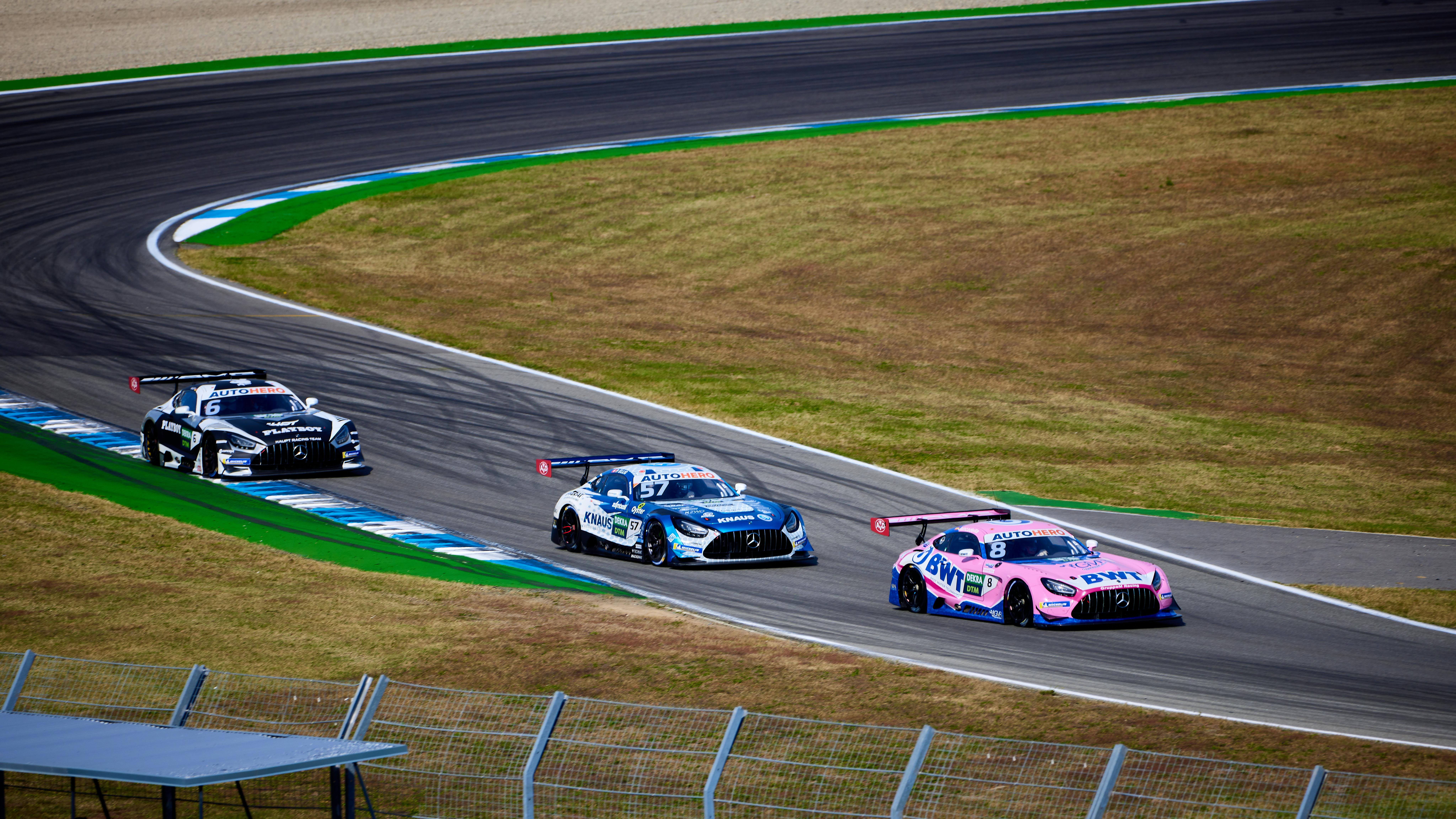
Originally a high-speed blast through the forest, the circuit was heavily modified in 2002. Today it combines sweeping sections with the tight, stadium-like Motodrom — housing tens of thousands of screaming fans, making it one of Europe's most atmospheric tracks.
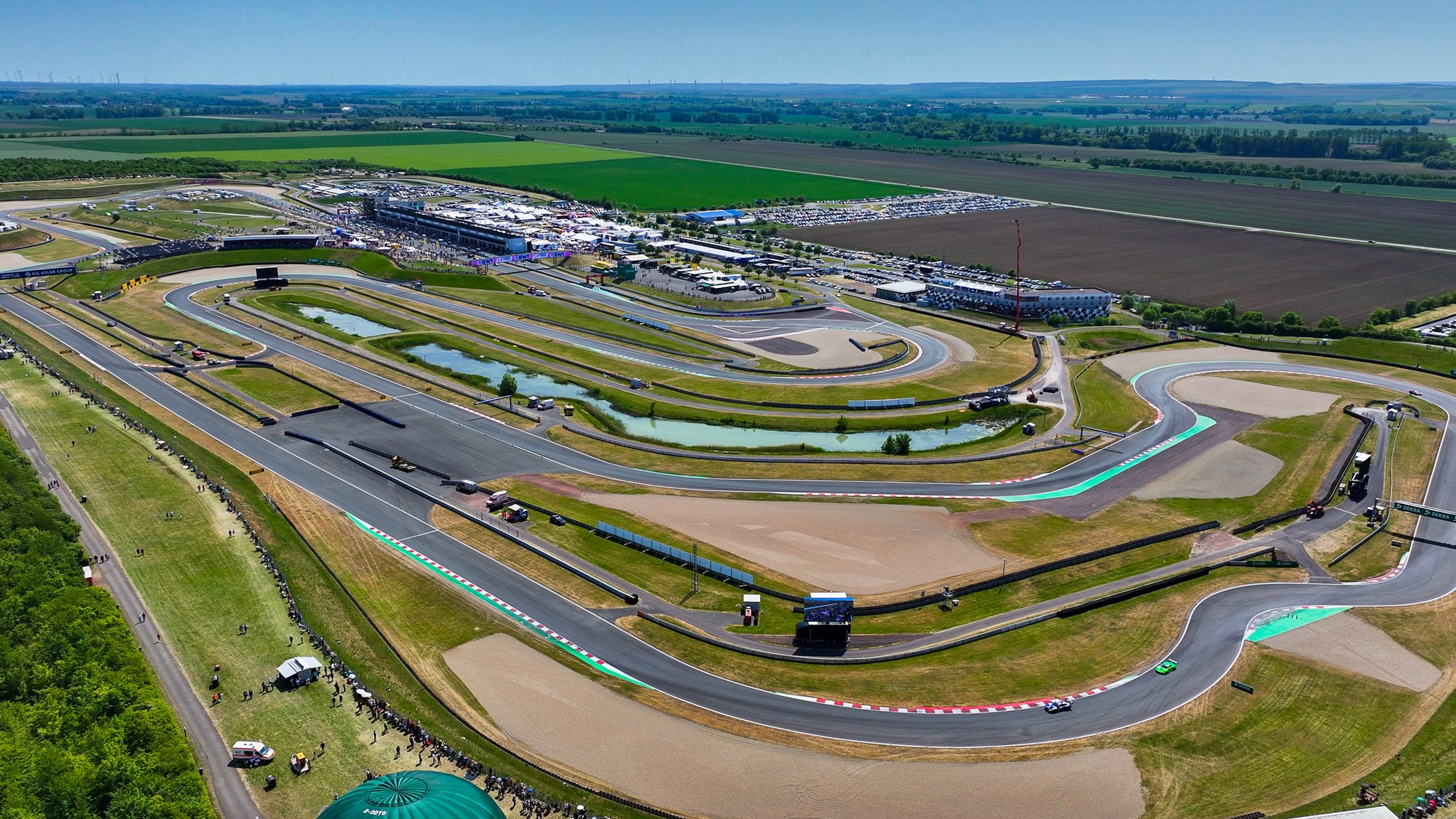
Opened in 1997, Oschersleben represents the precise, calculated nature of modern German motorsport infrastructure. Its flat, technical layout rewards consistency and tire management — a beloved battleground for DTM touring cars and endurance motorcycle racing.
Years of Heritage
Le Mans Victories
Nordschleife Corners
F1 Drivers' Titles